

Online Learning Strategies for Accelerating Your Business Growth

Online Learning Strategies for Accelerating Your Business Growth

Online learning is a must in today's rapidly evolving business landscape.

As well as embracing innovative strategies is essential for sustained growth.

One such strategy that has gained immense popularity is online learning.

This article explores the transformative power of online learning.

And how it can be a catalyst for accelerating your business growth.

online learning accelerate your business


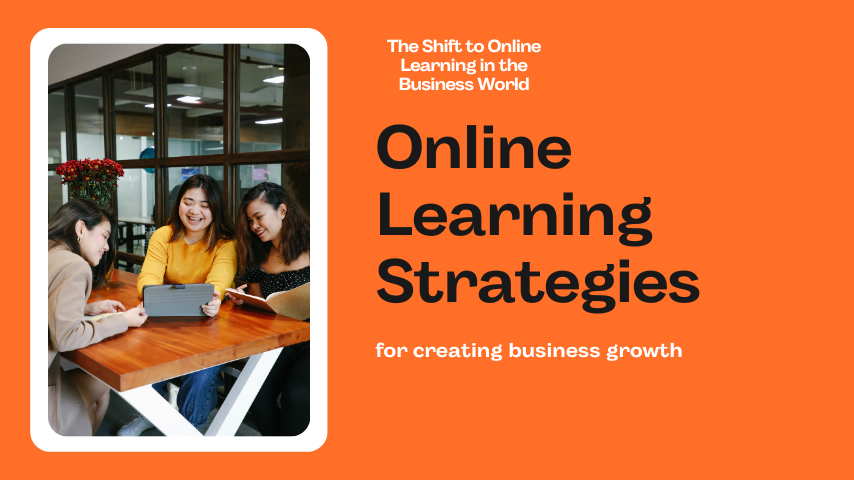
The Shift to Online Learning in the Business World


The traditional classroom setting is no longer the sole avenue for learning.

Businesses worldwide are recognizing the advantages of online learning.

Which offers flexibility, accessibility, and cost-effectiveness.

This shift allows employees to engage in continuous learning without geographical constraints.

Advantages of Incorporating Online Learning


Boosting Employee Skills and Productivity

Online learning provides a dynamic platform for employees.

Also, it will enhance their skills.

Through interactive modules and engaging content.

Likewise, individuals can acquire new knowledge

That directly contributes to increased productivity within the workplace.

Customizing Online Learning Programs for Your Business

It seems like one size does not fit all.

Specifically, tailor online learning programs to align with your business goals.

Again, ensure that employees receive relevant training.

In that case, leading to tangible outcomes.

This customization enhances the overall impact of the learning experience.

online learning

Utilizing Interactive Learning Platforms

In the first place, interactive platforms create an immersive learning environment.

Like incorporating quizzes, simulations, and real-world scenarios.

Because it keeps learners engaged and facilitates better retention of information.

This approach transforms mundane training into a dynamic and enjoyable experience.


Tracking Progress and Measuring Success

It is crucial to monitor progress and measure success.

To ensure the effectiveness of online learning.

Analytics tools can provide valuable insights into employee performance.

Therefore, it enables businesses to identify strengths and areas for improvement.


Addressing Common Concerns in Online Learning


Overcoming Resistance to Change

Resistance to change is a common hurdle to adopting online learning.

also communicating the benefits and providing adequate support.

And highlighting success stories can help overcome this resistance.

Additionally, foster a positive attitude towards online learning.

Security and Confidentiality in Online Learning

Security concerns often deter businesses from fully embracing online learning.

So, implementing robust security measures, such as encryption and secure authentication,

These can alleviate concerns and ensure the confidentiality of sensitive information.


Selecting the Right Online Learning Tools

The market is flooded with various online learning tools.

In that case, choosing the right ones for your business involves evaluating features.

Such as scalability and user friendliness.

A careful selection ensures a seamless learning experience for employees.

Tips for Successful Implementation

Successful implementation requires strategic planning.

Not to mention setting clear objectives.

Even more, providing adequate resources and offering continuous support.

These are key factors.

because that contributes to the seamless integration of online learning into your business culture.

Case Studies: Businesses Thriving with Online Learning

Highlighting real-world examples of businesses.

Those who have successfully implemented online learning can inspire others to follow suit.

For this reason, case studies provide tangible evidence.

Of the positive impact of online learning on employee performance and overall business growth.

online learning


Conclusion of Online Learning Strategies for Accelerating Your Business Growth


In conclusion, the integration of online learning strategies is a game-changer for businesses seeking sustainable growth.

The flexibility, customization, and interactive nature of online learning empower employees.

And contribute to a more agile and competitive business environment.


Frequently Asked Questions (FAQ)

Q1: How can businesses overcome resistance to online learning?

A1: Businesses can overcome resistance through effective communication, providing support, and showcasing success stories of positive outcomes from online learning.

Q2: Are there security measures in place to protect sensitive information during online learning?

A2: Yes, businesses can implement security measures such as encryption and secure authentication to ensure the confidentiality of sensitive information.


Final Message:

In the digital age, the importance of SEO-friendly content cannot be overstated. 

By optimizing your online learning content for search engines, you ensure that your valuable insights and expertise reach a broader audience. 

Invest in the growth of your business through strategic online learning.

And watch as your workforce transforms into a dynamic, skilled, and highly productive asset.

The Truth about Revenue Definition Explained in Simple Terms

The Truth about Revenue Definition Explained in Simple Terms

Revenue Definition:

Hey there, curious minds!

Ever found yourself scratching your head when the term "revenue" comes up in business discussions?

Fret not; you're not alone.

In this article, we'll embark on a journey to demystify revenue.

Also break down the formula, delve into calculations, and sprinkle in some real-world examples to make things crystal clear.

Revenue definition

What is the Definition of Revenue?

Let's kick things off with the basics.

Of course, Revenue is the lifeblood of any business—it's the money flowing in from all those products or services you're offering.

So, think of it as the paycheck your business receives for a job well done.


Revenue Definition and the Formula Unveiled

Now, let's get down to the nitty-gritty.

First of all, the formula for revenue is as straightforward as it gets:

Revenue=Number of Units Sold×Price per UnitRevenue=Number of Units Sold×Price per Unit

For the most part simple, right? 

No matter what you're selling. If it is widgets, gadgets, or doodads.

Certainly, this formula holds the key to unlocking your business's financial potential.


Revenue Definition and Crunching the Numbers

Let's break down the components of the formula.

And see how they dance together.

Imagine you're running a cozy online bookstore.

You sell 100 books (that's your number of units sold) at $20 each (the price per unit).

So, plug these numbers into the formula, and voila:

Revenue=100×$20=$2000Revenue=100×$20=$2000

As a result, there you have it—$2000 in revenue! It's like solving a puzzle, isn't it?


Revenue definition

Exploring Collections: Diving into Different Revenue Streams

Now, let's spice things up a bit by exploring different revenue streams, shall we? 

Collections on our website can be likened to the diverse offerings in a business.

From e-books to audiobooks, each collection represents a unique avenue for revenue.

  1. E-books Collection
    • Offering a digital haven for bookworms, our e-books collection caters to the tech-savvy reader. Dive into this collection to understand how digital sales contribute to your overall revenue pie.
  2. Audiobooks Collection
    • For those who prefer a narrative on the go, audiobooks are the way to go. Explore how this collection adds a melodious note to your revenue stream.

Real-world Examples for Revenue Definition: Bringing Theory to Life

Again, theory is all well and good, but let's ground our understanding with some real-world examples.

"Our E-books Collection saw a 30% boost in revenue last quarter, thanks to a strategic partnership with popular authors."

In fact, here, a tangible example highlights the impact of business decisions on revenue growth.


Why Revenue Matters

Now that we've grasped the nuts and bolts, let's explore why revenue is the linchpin of business success.

  1. Business Growth
    • Revenue is the fuel that propels your business forward. It's not just about making money; it's about funding expansion, innovation, and staying ahead of the competition.
  2. Investor Attraction
    • Investors are like bees to honey. A healthy revenue stream attracts potential investors, indicating a thriving and profitable venture.

"Our consistent revenue growth caught the eye of investors, leading to a fruitful collaboration that propelled us to new heights."


Revenue definition

Conclusion: Navigating the Revenue Definition Landscape

In conclusion, understanding revenue is like navigating a bustling city.

Therefore, you need a map and a sense of direction.

Because collections serve as landmarks.

As a result, guiding you through the diverse terrain of revenue streams.

While real-world examples act as signposts, showing you the way forward.

So, next time someone throws around terms like "revenue," or “revenue definition,” you can nod knowingly.

Above all, armed with the knowledge of formulas, calculations, and real-world anecdotes.

Happy navigating and may your revenue sail smoothly into the sunset of success!

Negotiation Skills for Sales Professionals in a Competitive Market

Negotiation Skills for Sales Professionals in a Competitive Market

Negotiation

Negotiation skills are a must in today’s cutthroat business landscape.

Sales professionals must have the art of negotiation to thrive and succeed.

The marketplace is fierce, with competitors vying for the same clients and consumers becoming increasingly discerning.

Mastering negotiation skills is paramount to standing out and securing deals in a highly competitive market.

In this comprehensive guide, we will delve deep into the intricacies of negotiation for sales professionals, equipping you with the tools, strategies, and techniques necessary to outperform your rivals and excel in your sales career.

Understanding the Foundations of Negotiation

Negotiation is not merely haggling over prices; it’s a strategic conversation that leads to a mutually beneficial agreement.

To become a successful sales negotiator, you must first understand the fundamental principles that underpin this art.

The Art of Active Listening

Effective negotiation starts with active listening.

The ability to listen attentively to your prospect’s needs, concerns, and objections is the bedrock of successful sales negotiations.

By actively listening, you can find pain points and tailor your pitch to address them, increasing your chances of closing the deal.

Building Rapport and Trust

Trust is the cornerstone of any successful negotiation.

Sales professionals who show rapport and trust with their prospects are likelier to reach favorable outcomes.

Invest time building relationships and proving your commitment to solving the client’s problems.

Preparation is Key

Before entering into a negotiation, thorough preparation is non-negotiable.

Research your prospects, their industry, and your competition.

A well-prepared sales professional has a significant advantage when it comes to influencing the negotiation in their favor.

Crafting a Winning Negotiation Strategy

negotiation

A strong negotiation strategy is the roadmap to success in a competitive market. Here are some key elements to consider:

Setting Clear Objectives

Define your goals before entering a negotiation. What are you hoping to achieve? Whether it’s closing the deal at a specific price, upselling, or securing a long-term contract, having clear goals will guide your negotiation strategy.

Understanding BATNA

Your Best Alternative to a Negotiated Agreement (BATNA) is your fallback option if negotiations fail. Knowing your BATNA empowers you with the confidence to walk away from unfavorable deals and strengthens your negotiation position.

The Power of Anchoring

Anchoring involves starting the negotiation with a favorable position.

This sets the tone and often influences the outcome.

Skilled negotiators use anchoring to their advantage, but it must be done subtly to avoid alienating the prospect.

Handling Objections with Grace

Expect objections during negotiations, and don’t view them as roadblocks.

Instead, see objections as opportunities to address concerns and provide valuable solutions.

Handling objections with grace and professionalism can turn skeptics into satisfied clients.

Communication is Key

Effective communication is the linchpin of successful negotiations.

As a sales professional, you should pay attention to both verbal and non-verbal cues.

Verbal Communication

Choose your words carefully and frame your arguments persuasively.

Use language that highlights the benefits of your product or service and addresses the prospect’s pain points directly.

Non-Verbal Communication

Body language, tone of voice, and facial expressions can convey confidence and trustworthiness.

Maintain eye contact, use open body language, and adopt a friendly tone to establish rapport.

Navigating Common Sales Negotiation Scenarios

negotiation

Sales professionals often encounter specific scenarios that require unique strategies.

Let’s explore some common scenarios and how to navigate them successfully.

Price Negotiations

Price is a common point of contention in sales negotiations.

To navigate this, focus on the value your product or service brings.

Highlight the return on investment and long-term benefits to justify your pricing.

Stalling and Delays

Prospects may stall or delay decisions.

In such situations, gently nudge them by highlighting the opportunity cost of delay.

Emphasize the benefits of acting promptly.

Handling Competitive Bids

In competitive markets, you may face competing bids.

Emphasize what sets your product or service apart and your unique value.

Highlight your record of accomplishments and success stories.

The Art of Closing the Deal

Closing the deal is the goal of any sales negotiation.

Here are some closing techniques to seal the deal effectively:

The Assumptive Close

Assume the prospect has already decided to buy, and guide them through the process.

Phrases like “When would you like to get started?” can be incredibly effective.

The Alternative Choice Close

Offer the prospect two choices, both leading to a positive outcome.

This gives them a sense of control, increasing the likelihood of a successful close.

The Trial closes

Throughout the negotiation, test the prospect’s readiness to close by asking questions like, “If we can address your concerns, are you ready to move forward?”

Continuous Improvement and Adaptation

The world of sales is constantly evolving, as should your negotiation skills.

Stay updated with industry trends, seek feedback, and be open to learning from both successes and failures.

Continuous improvement is the key to long-term success in sales.

In Conclusion: Negotiation Skills for Sales Professionals in a Competitive Market

Mastering negotiation skills for sales professionals in a competitive market is an ongoing journey.

Understanding the foundations, crafting a winning strategy, focusing on effective communication, and navigating common scenarios can significantly enhance your ability to close deals and outperform your competitors.

Negotiation Skills for Successful Business Professionals

Negotiation Skills for Successful Business Professionals

negotiation skills

Negotiation skills are an essential factor in the world of business.

Whether you're brokering deals or managing conflicts, or simply trying to secure a better price, the ability to negotiate effectively can make or break your success as a professional.

In this article, we will explore the art of negotiation.

And provide you with valuable insights into developing the skills necessary.

For you to achieve positive outcomes in your business interactions.


In the competitive landscape of the business world, negotiations are a cornerstone skill that can drive growth and success.

It plays a pivotal role in decision-making processes.

Also, ensure you get the best deals, form lasting partnerships, and support healthy business relationships.


Understanding the Basics of Negotiation


negotiation skills

Setting Clear Objectives

Before entering into any negotiation, it's crucial to define your objectives. What do you want to achieve? Having a clear understanding of your goals will guide your negotiation strategy.

Research and Preparation 

Thorough research and preparation are key to a successful negotiation. Knowing the other party's needs, expectations, and potential constraints gives you a significant advantage.

Effective Communication 

Communication is the heart of negotiation. Developing active listening skills, articulating your points clearly, and understanding non-verbal cues can greatly change the outcome.


Building Rapport and Trust

negotiation skills

Establishing Trust 

Trust is the foundation of all successful negotiations. Building rapport with the other party, being honest, and showing integrity are essential for fostering trust.

Finding Common Ground 

Finding shared interests and goals can create a positive atmosphere and common ground for negotiation.


The Art of Compromise 


Negotiation skills

Willingness to Compromise 

Negotiation often involves giving and taking. Being flexible and open to compromise can lead to mutually beneficial outcomes.

Creating Win-Win Scenarios 

Striving for win-win solutions ensures that both parties leave the negotiation table satisfied, fostering long-term relationships.


Overcoming Challenges in Negotiation


Dealing with Conflict 

In negotiation, conflicts may arise. Understanding conflict resolution techniques is essential to navigating these challenges effectively.

Handling Difficult Personalities 

Some individuals may present unique challenges in negotiations. Learning how to manage difficult personalities can lead to positive outcomes.


Leveraging Technology for Negotiating Skills


Negotiating skills

Utilizing Negotiation Tools 

In the digital age, various negotiation tools and software can streamline the process, enhance communication, and help achieve better outcomes.


Measuring and Evaluating Success 


Post-Negotiation Analysis 

After a negotiation, it's important to assess the results. Analyzing what worked and what didn’t helps you refine your negotiation skills for future success.


Conclusion of Negotiation Skills for Business Professionals


In conclusion, negotiation skills are a vital asset for business professionals aiming to achieve positive outcomes.

Mastering the art of negotiation, from setting clear goals to fostering trust and embracing compromise, can elevate your success in the business world.

By continually refining your negotiation skills, you'll be better equipped to navigate the complexities of the corporate landscape and secure favorable deals.

Frequently Asked Questions


1. What are the key elements of a successful negotiation?

Successful negotiation involves clear goals, thorough research, effective communication, trust-building, and a willingness to compromise.

2. How can I improve my active listening skills during negotiations?

You can improve your active listening by focusing on the speaker, asking clarifying questions, and summarizing their key points.

3. What should I do if a negotiation becomes confrontational?

When a negotiation turns confrontational, it's crucial to remain calm, focus on the issues, and use conflict resolution techniques to find common ground.

4. How can I use technology to enhance my negotiation skills?

Technology offers negotiation tools and software that can streamline the process, improve communication, and help with data analysis, contributing to better outcomes.

5. Why is it important to evaluate the results of a negotiation?

Evaluating the results of a negotiation allows you to learn from your experiences, find areas for improvement, and refine your negotiation strategy for future success.

Quantum AI: Pioneering the Next Generation of Computing

Quantum AI: Pioneering the Next Generation of Computing

Quantum AI: Unraveling the Future of Computing

In the ever-evolving landscape of technology, Quantum AI stands as a beacon of innovation and limitless potential.

Combining the power of quantum mechanics with artificial intelligence.

Quantum AI has the capability to revolutionize industries.

Especially, solving complex problems that were once considered unsolvable.

In this article, we delve into the fascinating world of Quantum AI.

Therefore, exploring its fundamental concepts and applications.

As well as the impact it may have on our future.

Quantum AI

Table of Contents

  1. Introduction to Quantum AI
  2. The Quantum Advantage
  3. Quantum Bits (Qubits): The Building Blocks
  4. Quantum Superposition and Entanglement
  5. Quantum AI Algorithms
  6. Quantum AI in Healthcare
  7. Quantum AI in Finance
  8. Quantum AI in Cybersecurity
  9. Challenges and Limitations
  10. The Quantum AI Race
  11. The Ethical Implications
  12. Quantum AI and Climate Science
  13. Quantum AI and Materials Science
  14. Quantum AI in Space Exploration
  15. Conclusion

1. Introduction to Quantum AI

Quantum AI, at its core, is the amalgamation of two cutting-edge fields: quantum computing and artificial intelligence.

Moreover, uses the principles of quantum mechanics.

To perform calculations and data processing in ways that classical computers cannot emulate.

2. The Quantum Advantage

The power of Quantum AI lies in its ability to harness quantum properties.

Such as superposition and entanglement.

Unlike classical bits, quantum bits or qubits can exist in multiple states simultaneously.

By the same token, exponentially increasing computational capabilities.

3. Quantum Bits (Qubits): The Building Blocks

Understanding qubits is crucial to grasp Quantum AI's functioning.

These quantum counterparts to classical bits are the foundation upon which quantum algorithms are built.

4. Quantum Superposition and Entanglement

Superposition allows qubits to stand for multiple values at once.

And entanglement enables the correlation of qubits' states.

Even when separated by vast distances, paving the way for secure communication.

5. Quantum AI Algorithms

Quantum AI algorithms, such as Shor's and Grover's algorithms, show remarkable speed-ups.

As well as, solving complex mathematical problems and searching unsorted databases.

6. Quantum AI in Healthcare

Quantum AI promises to revolutionize healthcare through accelerated drug discovery.

Not to mention optimized treatment plans, and the deciphering of complex biological systems.

7. Quantum AI in Finance

The finance sector stands to gain from Quantum AI's ability to simulate intricate financial models.

Likewise predict market trends and enhance risk management strategies.

8. Quantum AI in Cybersecurity

Quantum AI's encryption-breaking potential has spurred efforts to develop quantum-resistant cryptographic techniques.

As a result, ensuring data security in the post-quantum era.

9. Challenges and Limitations

Despite its promise, Quantum AI faces challenges.

They may include error rates, hardware development, and the need for a quantum workforce.

10. The Quantum AI Race

Nations and corporations worldwide are engaged in fierce competition.

To lead in Quantum AI research and development, marking a new technological race.

11. The Ethical Implications

As Quantum AI becomes more powerful, ethical considerations surrounding its use.

Such as privacy concerns and the potential for misuse, come to the forefront.

12. Quantum AI and Climate Science

Quantum AI accelerates climate research by simulating complex climate models.

In that case, aiding in the fight against climate change.

13. Quantum AI and Materials Science

Materials science benefits from Quantum AI's ability to design new materials.

Certainly, with tailored properties.

In fact, revolutionizing industries like electronics and aerospace.

14. Quantum AI in Space Exploration

Quantum AI enhances space exploration by perfecting mission planning.

Also, navigation, and communication in the vast expanse of the cosmos.

15. Conclusion

In conclusion, Quantum AI is poised to reshape industries.

Tackle humanity's most pressing challenges.

And redefine the boundaries of computation.

As we continue to unlock its potential, it is vital to approach Quantum AI with ethical considerations and responsible innovation.

FAQs

  1. What makes Quantum AI different from classical AI? Quantum AI harnesses the unique properties of quantum mechanics, such as superposition and entanglement, to perform calculations beyond the capabilities of classical computers.

  2. How does Quantum AI impact everyday life? Quantum AI can influence various aspects of life, from healthcare and finance to climate science and space exploration, by solving complex problems more efficiently.

  3. What are the main challenges in Quantum AI development? Challenges include reducing error rates, scaling up quantum hardware, and addressing ethical concerns related to its applications.

  4. Is Quantum AI accessible to the average person? Currently, Quantum AI is primarily in the domain of research and large organizations, but as technology advances, its accessibility may increase.

  5. How can Quantum AI benefit the environment? Quantum AI aids in climate research and materials science, contributing to environmentally friendly solutions and sustainable development.

F65158EFB2A6F5D2B1849FF9351EFD34